Chimneys on Long Island take a beating. The freeze-thaw cycles, salt air, and moisture that come with our climate create constant stress on masonry. Elmont homeowners who heat with oil often rely on their chimneys year-round, which means these structures endure more than they might in warmer regions. When damage starts, it spreads quickly. A small crack in mortar becomes a pathway for water. Water leads to brick deterioration. Brick failure compromises the entire system. That's why early attention matters so much to residents of Elmont.
The mortar joints between bricks are the first line of defense against weather penetration. These joints naturally wear down over decades, especially on chimneys exposed to Nassau County's moisture and temperature swings. Homes in Elmont built in the mid-20th century often have chimneys with original mortar that has long since lost its integrity. When mortar erodes, water seeps into the brick and underlying masonry. This water freezes in winter and thaws in spring, creating expansion that cracks bricks from the inside out. Elmont residents who notice white powdery deposits on bricks or mortar that crumbles at a touch should contact a professional right away.
Water intrusion represents the most dangerous outcome of chimney neglect. Moisture that enters through damaged mortar or cracks can travel down inside your chimney. It reaches the wood framing, insulation, and interior walls of your home. Homeowners in Elmont may notice water stains on ceilings or walls near the chimney during heavy rains or snow melt. Sometimes the damage happens slowly and invisibly for months before it becomes visible. By that point, mold growth, wood rot, and structural compromise may already be underway. Prevention through regular inspection and timely repair keeps water where it belongs: on the outside of your chimney.
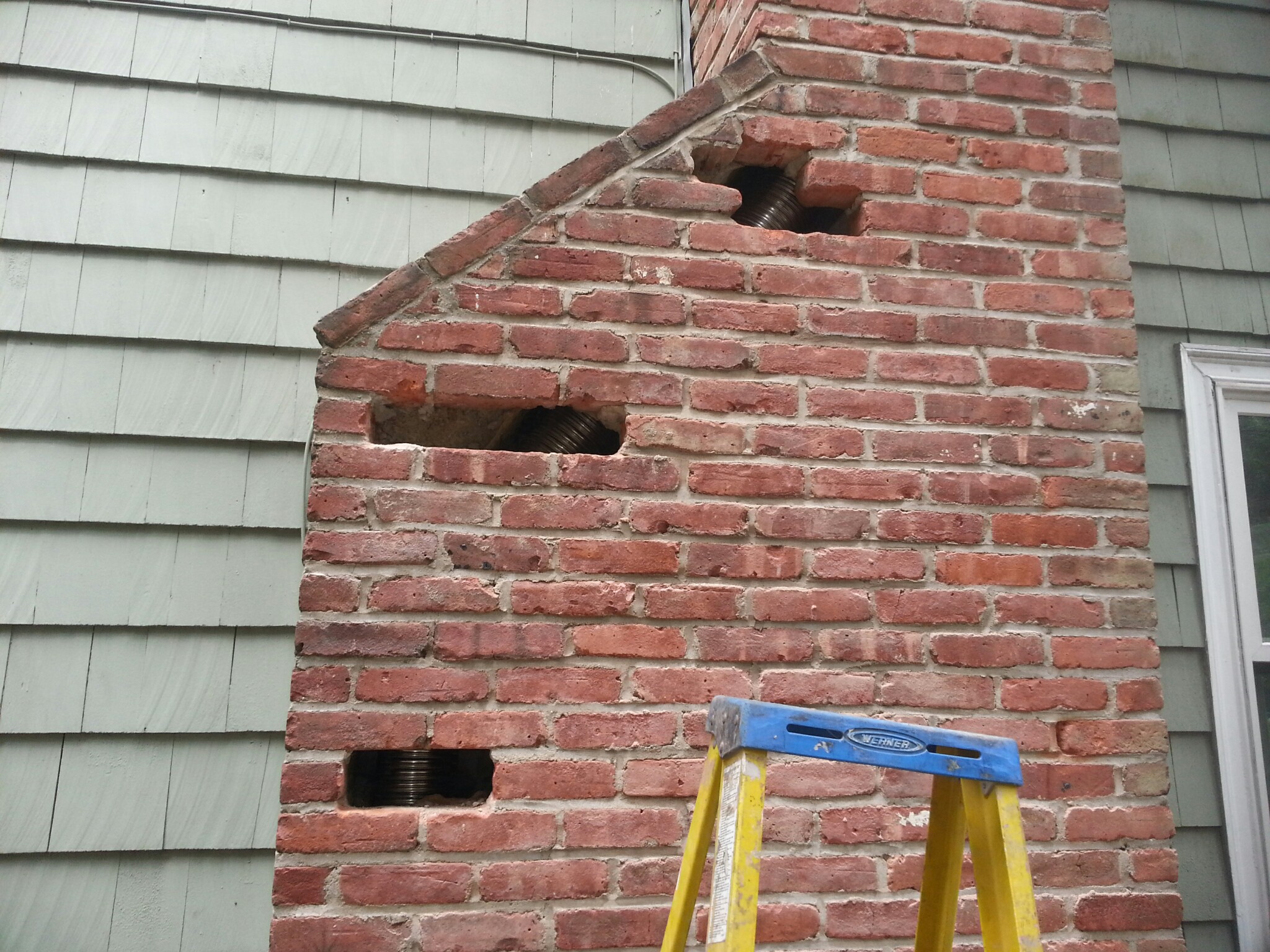
Brick damage takes many forms, and each requires different repair approaches. Some bricks crack vertically or develop spalling, where the outer face breaks away in layers. Others crumble or show signs of efflorescence, the white mineral deposits that indicate water movement through the masonry. Elmont properties with chimneys situated where wind-driven rain hits hardest tend to experience more aggressive brick failure. The salt-laden air from Long Island Sound and the Atlantic also accelerates deterioration in nearby areas. Identifying the type of damage helps determine whether individual bricks need replacement or whether the problem stems from mortar joint failure that's causing secondary damage to the surrounding masonry.
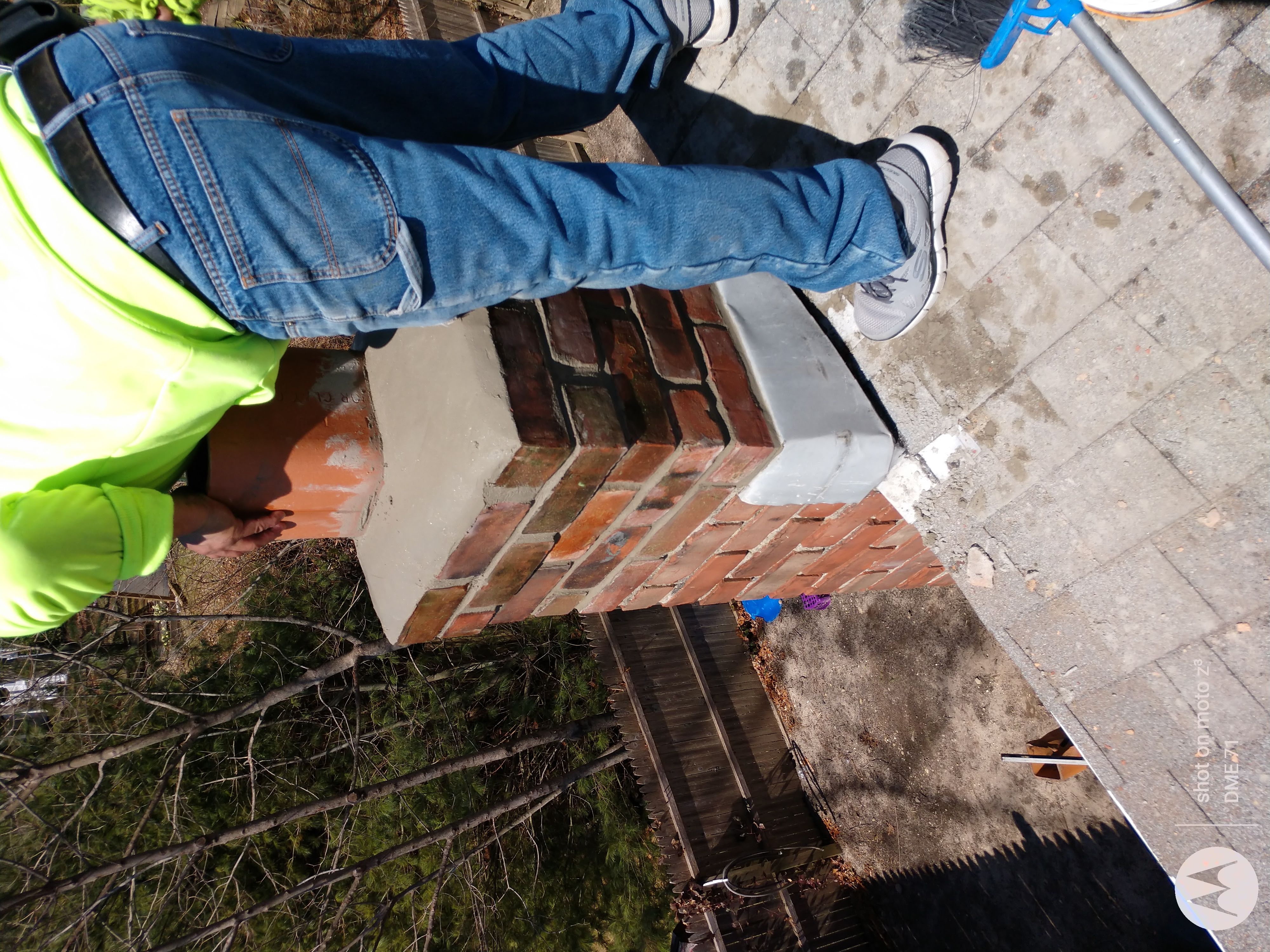
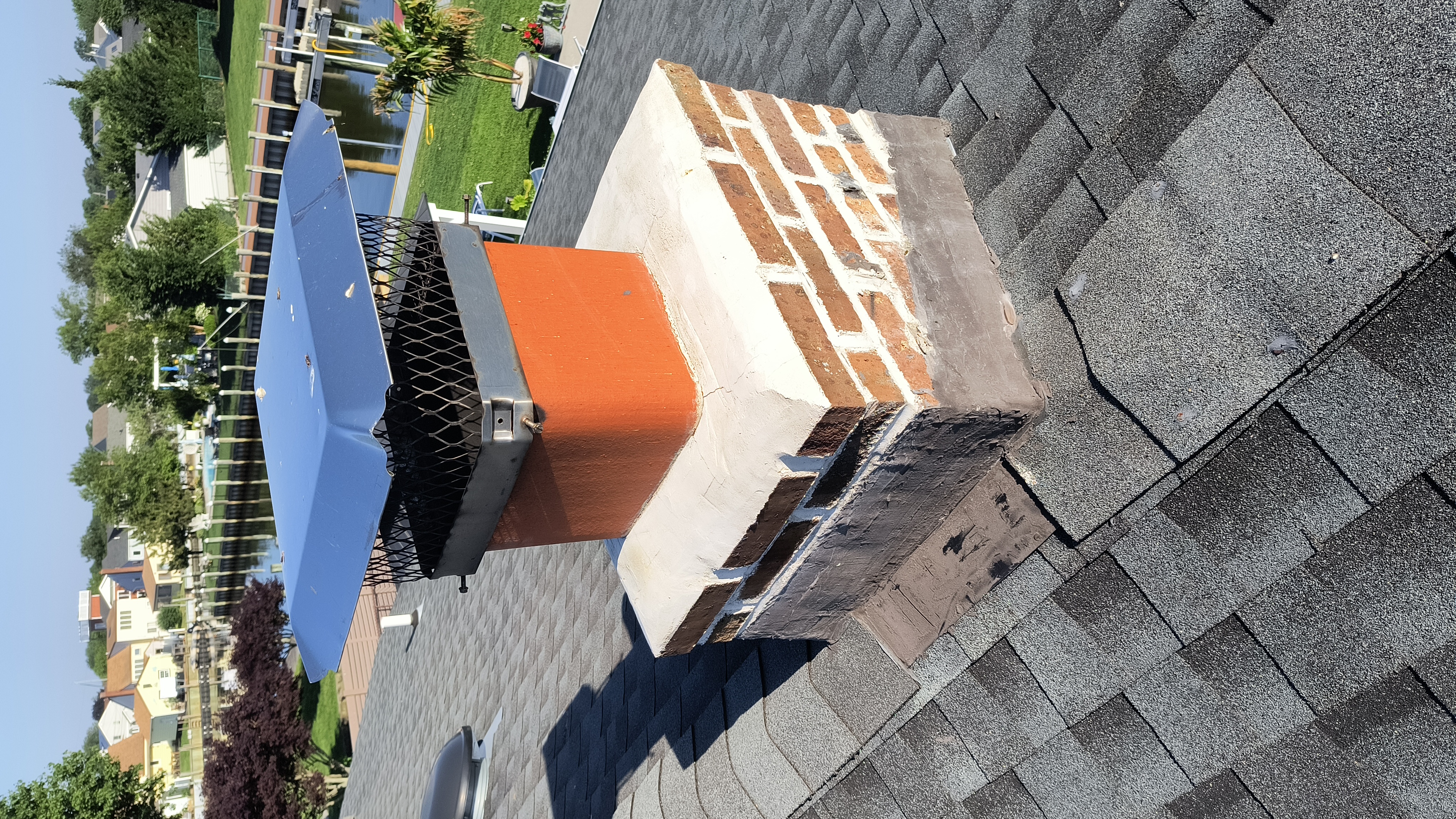
The structural integrity of your chimney depends on all its components working together as a system. The mortar holds bricks in alignment. The brick distributes loads evenly. The chimney crown prevents water from cascading down the exterior. The flashing creates a watertight seal where the chimney meets your roof. Damage to any single component stresses the others. A crown that's cracked allows water to pool on top of the chimney. That water pressure weakens mortar joints faster. Weakened mortar lets bricks shift slightly. Shifted bricks no longer distribute weight evenly, leading to more cracking. Elmont residents who maintain all these components together avoid the cascade of failures that turn minor repairs into major projects.
DME Maintenance has served the Elmont area since 2001, and we've seen how chimney problems evolve over time. We know the specific challenges that homes in Elmont face based on local building styles, age of construction, and our regional climate. Our owner, Douglas Eberling, brings decades of hands-on experience diagnosing what's causing deterioration and determining the right repair approach. We examine mortar quality, brick condition, water damage patterns, and structural alignment. This diagnostic work tells us whether you need spot repairs or more comprehensive masonry work. Every chimney tells a story about how it's been treated and what it still needs.
We work throughout Elmont, covering every corner of the community. Our familiarity with Elmont means we understand the local architecture and the specific chimney maintenance challenges that come with Long Island's climate — wet winters, freeze-thaw cycles, and the salt air that accelerates mortar deterioration over time.
Seasonal changes on Long Island make year-round chimney maintenance important. Winter cold and spring thaw stress masonry joints. Summer humidity creates different problems than winter dryness. Fall rain and wind-driven precipitation expose weaknesses in crowns and flashing. Homeowners in Elmont shouldn't wait for one season to cause catastrophic failure before addressing visible damage. A small mortar joint issue caught in spring becomes a major water intrusion problem by winter if left unrepaired. Professional inspection helps identify problems while repairs remain manageable and cost-effective.
The best time to address chimney repair is before water damage extends into your home's structure. If you live in Elmont and notice any of these signs, contact us soon: white powder or staining on bricks, mortar that crumbles when touched, cracks in the chimney visible from the ground or roof, water stains near your chimney inside the house, or deteriorating bricks on the exterior. Call DME Maintenance at 516-690-7471 today. We'll inspect your chimney, explain what we find, and discuss how to protect your home from further damage.